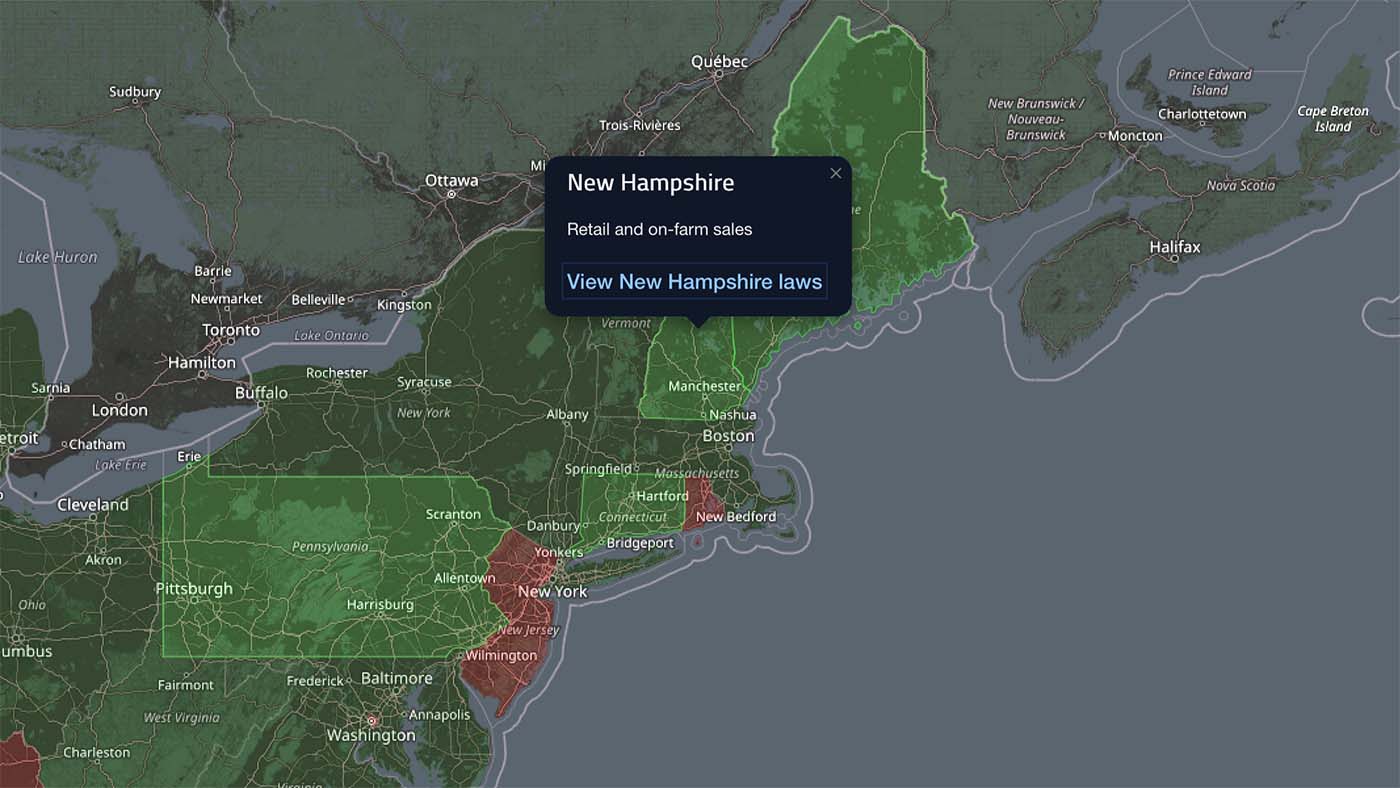
HB 396 would allow New Hampshire farmers to sell beef, pork, lamb, and goat meat that hasn’t been inspected by the U.S. Department of Agriculture (USDA) as currently required by federal law.
Meat processing is artificially expensive
The Problem It’s Trying to Fix: New Hampshire only has three or four USDA-inspected slaughterhouses, and small farmers have to schedule appointments one to two years in advance to get their animals processed. This creates a major bottleneck for local farmers who want to sell their meat.
Someone can own and harvest meat, but their usage options are limited. They can do the butchering themselves and keep it for personal use, or hire a custom processor, but none of this meat can be sold. HB 396 was passed to allow those sales within the state.
Sales become legal for custom processed meat
What the Bill Would Do:
- Allow farmers to butcher animals and sell the meat directly to New Hampshire consumers without USDA inspection
- The meat could only be sold within New Hampshire (not across state lines)
- Farmers would have to sign a statement acknowledging they’re violating federal law and could face federal prosecution
- All meat sold this way would have to be clearly labeled as “not federally inspected,” including on restaurant menus
The Controversy:
This bill is contentious because:
- The USDA has said the bill would violate federal food safety requirements
- New Hampshire’s Agriculture Commissioner opposed it, saying it lacks consumer safeguards and questioned whether insurance companies would cover farmers selling uninspected meat
Supporters argue it helps small farmers and gives consumers more local food choices. Critics worry about food safety and potential harm to farmers’ reputations if someone gets sick. It’s essentially a states’ rights versus federal regulation showdown over local food systems.